
Pavani Ponnimbaduge Perera
Tagline:Doctoral Candidate at University of Nevada, Reno
Reno, NV, USA
About Me
ආයුබෝවන් 🇱🇰!!
Welcome!!
My journey as a scientist began with a simple curiosity about how animals adapt to extreme environments, and today that same curiosity has led me to pursue a doctoral degree in Cellular and Molecular Biology at the University of Nevada, Reno, in the United States.
At the Riddle Lab, I explore the mysteries of how the gastrointestinal tract has evolved over time. To do this, I use a fascinating little fish as my model system Astyanax mexicanus, also known as the Mexican tetra. With its unique evolutionary history, this species allows me to dive deeper into my research interests.
I use tools such as comparative genomics, transcriptomics, gene editing, and bioinformatics to uncover the genetic and physiological basis of gut evolution.
My academic journey began in Sri Lanka, where I studied at the University of Colombo. There, I specialized in Zoology and earned my honors degree from the Department of Zoology and Environment Sciences. Those years gave me a strong foundation, and they continue to inspire the work I do today.
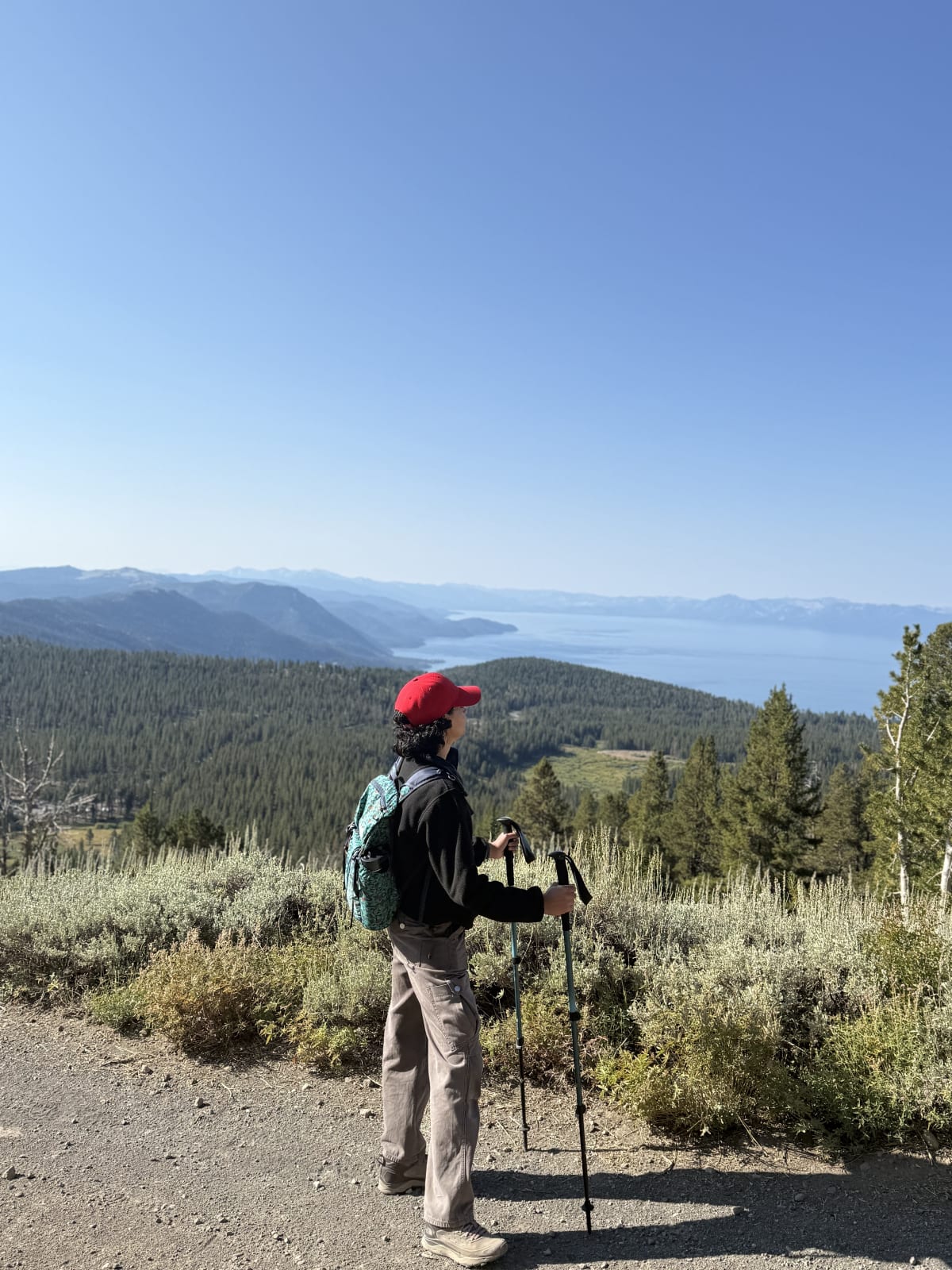
Outside the lab, I love to read, hike, watch football and go birdwatching in my free time.
Curriculum Vitae
DownloadEducation
PhD in Cell and Molecular Biology
from: 2021, until: presentField of study:Developmental BiologySchool:Department of Biology, University of Nevada, RenoLocation:Reno, NV
B.Sc., (Hons) Zoology
from: 2015, until: 2019Field of study:ZoologySchool:Faculty of Science, University of ColomboLocation:Sri Lanka
Research Interests
- Neural crest biology
- Evolutionary genetics
- Developmental Biology
Research
Vertebrates have evolved to thrive on an incredible variety of diets, from whales that filter tiny shrimp to snakes that swallow entire animals whole. To keep up with such diversity, gastrointestinal (GI) tract has had to adapt in remarkable ways. Across the animal kingdom, we see the gut reshaped in its form, function and physiology, each adaptation representing how animals survive and flourish on the foods available to them.
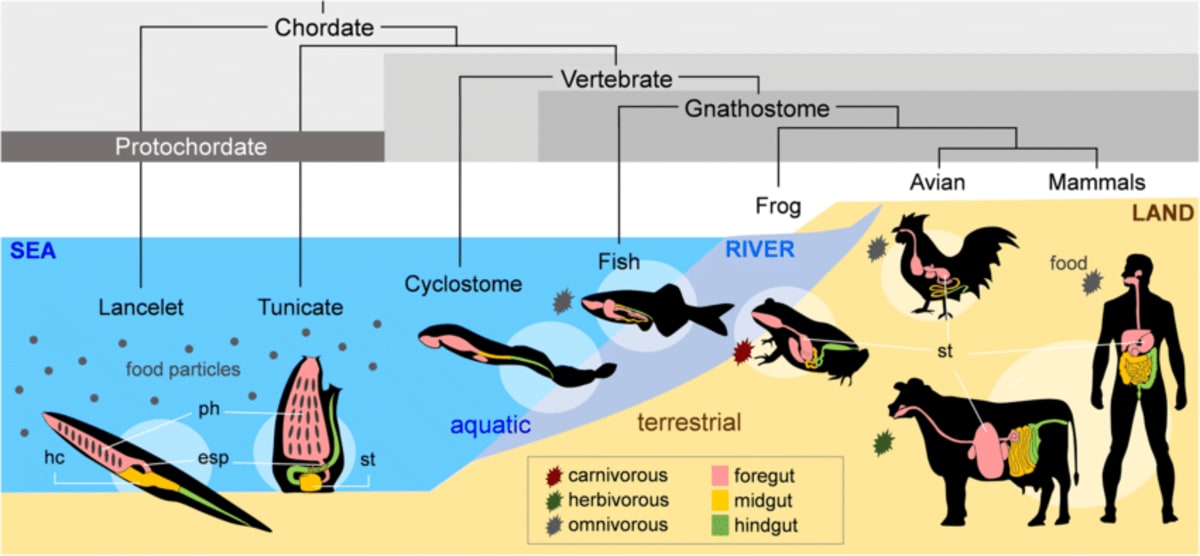
Astyanax mexicanus as a model system to study gut evolution and development
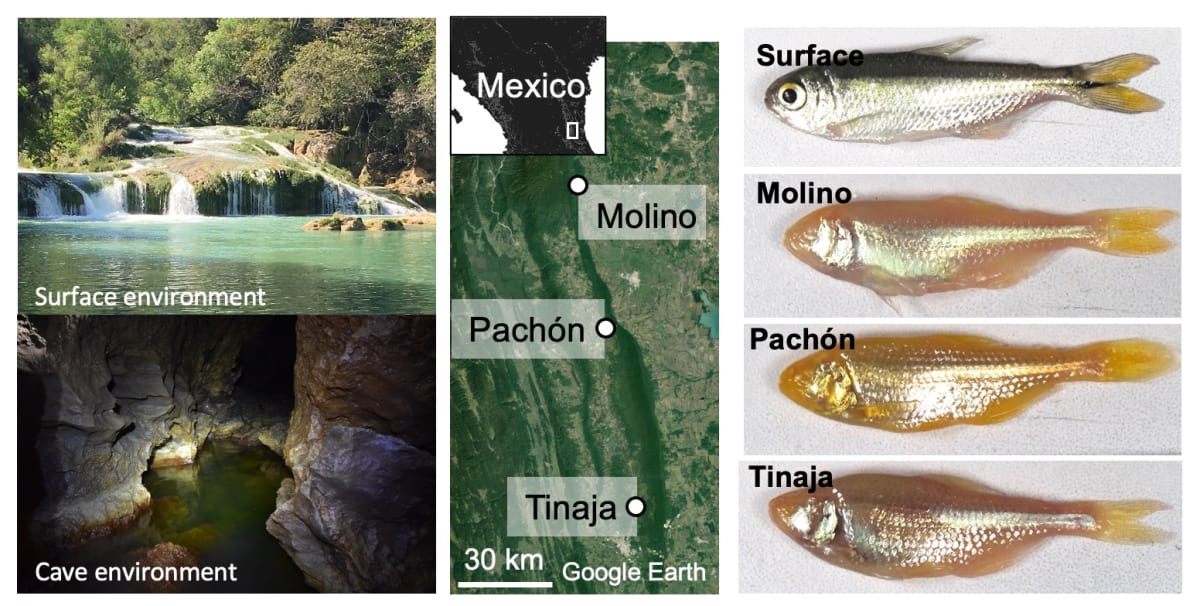
Astyanax mexicanus is a single teleost species that exists in two distinct morphotypes: the river-dwelling surface fish and the cave-dwelling “eyeless” cavefish (Molino, Pachón, and Tinaja). These morphotypes are found in rivers and in limestone caves of the Sierra de El Abra region in Tamaulipas and San Luis Potosí, Mexico.
Approximately 200,000 years ago, ancestral surface fish repeatedly colonized caves, extreme environments characterized by complete darkness, lack of primary productivity, and limited food availability compared to river ecosystems. At least three cavefish populations appear to have independently evolved troglomorphic traits.
Cavefish display regressive traits, such as eye and pigmentation loss, altered metabolism, and disrupted circadian rhythms, as well as constructive traits, including increased fat storage, enlarged yolk size, and expanded taste bud numbers.
For further details, see our review article The Mexican Tetra, Astyanax mexicanus, as a Model System in Cell and Developmental Biology.
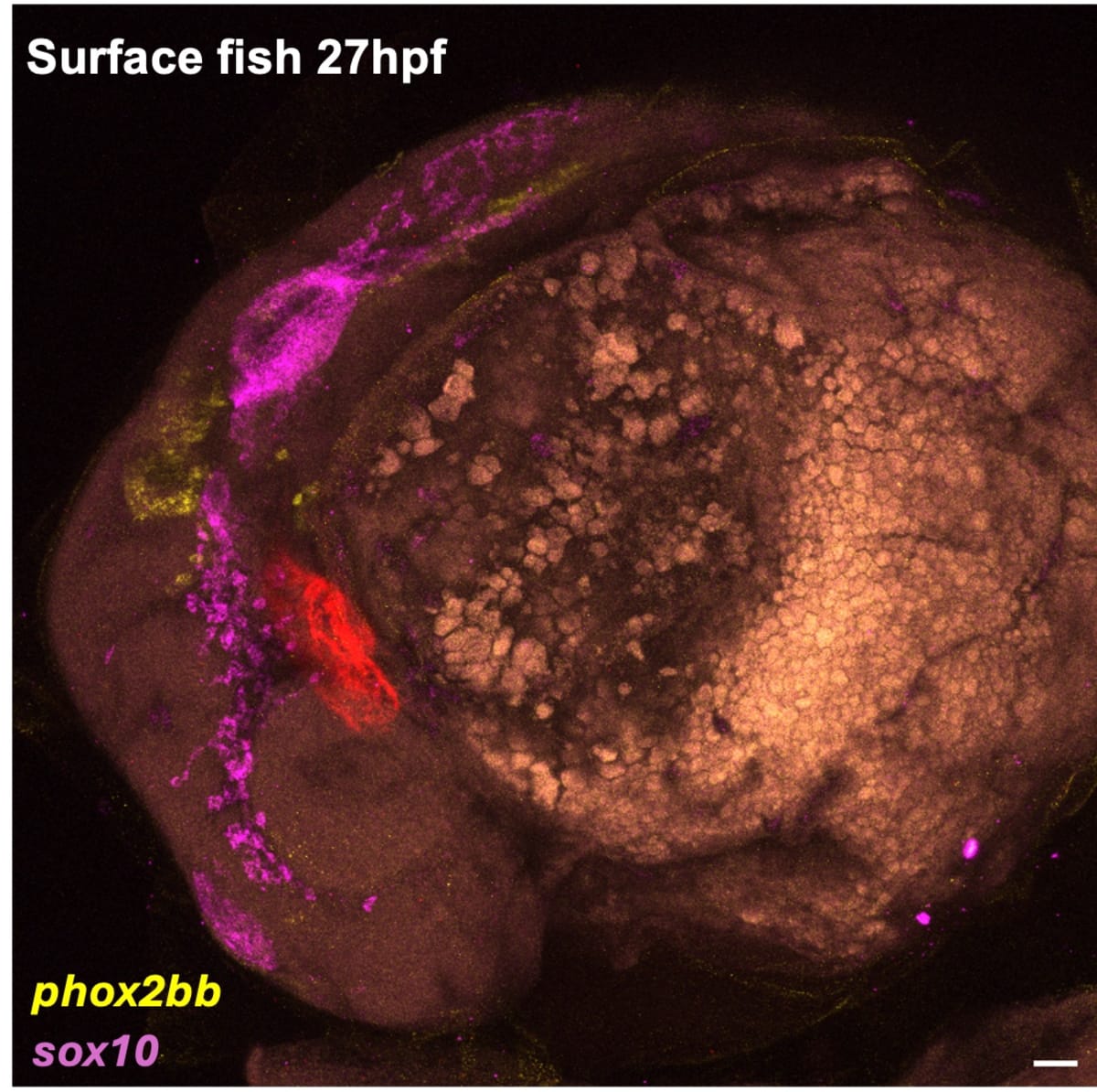
Enteric neural crest development in A. mexicanus surface fish and cavefish
At 8.5 and 12.5 days post fertilization, cavefish show altered intestinal motility in the stomach and midgut compared to surface fish. They also display delayed gut transit, likely an adaptation to maximize nutrient absorption in food-scarce cave environments (Riddle et al., 2018).
The enteric nervous system (ENS) is a dense network of neurons and glial cells embedded in the gut which controls motility, blood flow, and hormone secretion. Previous work in our lab has shown that the total number of enteric neurons does not differ between surface fish and cavefish. Building on this foundation, I focus on early ENS development. By fixing larvae at specific developmental stages and visualizing enteric neural crest cells, I discovered that cavefish exhibit accelerated migration and differentiation of these cells as early as 48 hours post-fertilization. Through this work, A. mexicanus has emerged as a powerful model for exploring how the enteric nervous system develops and evolves.
Evolution of gastrointestinal tract morphology and plasticity in Mexican tetra, Astyanax mexicanus
One of the big questions I explore is whether the gut of surface fish had to change as it adapted to the extreme, nutrient-deprived environment of caves and if so, how?
I am also interested in how cavefish guts respond to different dietary conditions, which allows us to understand both their evolutionary history and their plasticity in adjusting to new challenges.
Another part of my work focuses on the diversity of gut cell types. By identifying and comparing the cellular composition of surface fish and cavefish guts, I can ask how evolution has reshaped the gut at the level of its building blocks.
To tackle these questions, I use a combination of modern approaches, including single-cell isolation, flow cytometry, fluorescence microscopy, comparative genomics, single-cell RNA sequencing and bioinformatics. Together, these tools help us uncover how gut morphology and function have evolved in response to life in two very different environments.
Publications
Enteric neural crest development in Astyanax mexicanus surface fish and cavefish
Journal ArticlePublisher:DifferentiationDate:2025Authors:Pavani Ponnimbaduge PereraKaitlyn WebsterMisty R. RiddleThe Mexican Tetra, <i>Astyanax mexicanus,</i> as a Model System in Cell and Developmental Biology
Journal ArticlePublisher:Annual Review of Cell and Developmental BiologyDate:2023Authors:Pavani Ponnimbaduge PereraDavid Perez GuerraMisty R. Riddle
Teachings
Graduate Teaching Assistant
From: 2024, Until: present
Organization:Department of Biology, UNRField:BIOL 415.615 Evolution
Description:Teaching responsibilities
- Facilitate primary literature reviews
- Lead journal paper discussion sessions
- Conduct workshops on population genetics and phylogenetics
- Run exam review sessions
- Grade assignments and exams
High School Teacher
From: 2021, Until: 2022
Organization:Royal Institute International School, Sri LankaField:Biology
Description:• Cambridge International AS & A Level Biology
Assistant Lecturer
From: 2019, Until: 2020
Organization:University of Colombo, Faculty of Science, Sri LankaField:Zoology and Environment Sciences
Description:Preparing, organizing, and teaching practical/laboratory classes for the following courses:
• ZL 1008 – Variety of Animal Life
• ZL 1009 – Evolution and Biogeography
• ZL 1010 – Animal Behavior
• EN 1008 – Introduction to Environmental Science
• Designing and implementing new laboratory exercises
• Leading field sessions
Contact
Ask Pavani!
Connect with me!